Advanced semiconductor fabs rely on extremely regulated chemical delivery procedures to preserve wafer high quality, process uniformity, and production uptime. As semiconductor geometries diminish and manufacturing procedures a lot more demanding, chemical delivery cupboards need to give precise control while reducing contamination, leak, direct exposure, and procedure disturbances. A well-designed cabinet integrates high-purity materials, automated controls, safety and security systems, keeping an eye on modern technologies, and scalable style right into a single reliable system.
Pureness and Contamination Control
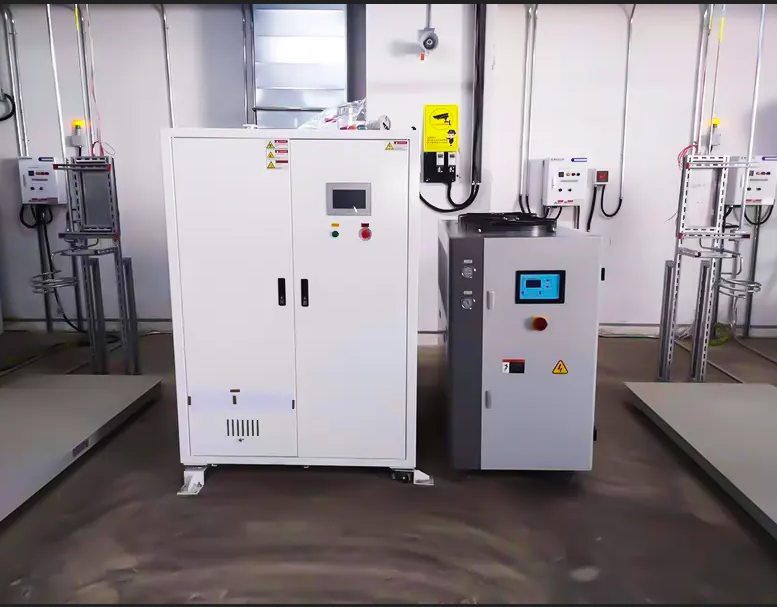
Pureness is among one of the most essential considerations when making a chemical delivery cabinet for semiconductor production. Even trace contamination can impact delicate fabrication processes, making product selection, element style, and fluid-path configuration essential. Moistened parts ought to be chosen for chemical compatibility and low particle generation, while the total system needs to be made to lessen dead legs, stagnant locations, and prospective contamination points.
High-purity piping and fittings, consisting of electropolished 316L stainless steel where appropriate, can help preserve requiring sanitation requirements. Correct securing, filtering, flushing, and controlled chemical transfer treatments even more sustain consistent chemical high quality from the supply source to the factor of usage.
Products and Element Selection
Cabinet materials have to endure the chemicals being taken care of while preserving long-term mechanical and sanitation efficiency. Engineers need to examine chemical compatibility, corrosion resistance, surface area finish, pressure scores, temperature problems, and upkeep demands when selecting piping, valves, regulatory authorities, sensing units, and installations.
The selection of components should likewise take into consideration the entire fluid path instead of specific components. Valves and installations with appropriate interior geometry can reduce particle generation and improve circulation control. Standard high-purity elements can furthermore simplify maintenance and spare-parts management across multiple closets.
Automation and Process Control
Automation plays a central role in modern chemical delivery cupboards. Programmable logic controllers (PLCs) can collaborate shutoffs, pumps, sensors, alarms, and interlocks while maintaining specified operating sequences. Automated control can minimize dependancy on hand-operated intervention and provide repeatable chemical distribution problems.
For advanced facilities, automation can also support recipe-based procedure, devices status tracking, alarm system management, and communication with higher-level center or production systems. This produces a much more regular operating atmosphere and aids engineers identify procedure irregularities before they turn into larger manufacturing problems.
Safety and Leak Avoidance

Chemical distribution cabinets need to incorporate numerous layers of defense due to the fact that semiconductor chemicals may be corrosive, toxic, responsive, or otherwise hazardous. Cabinet style should as a result attend to containment, air flow, leak discovery, emergency situation seclusion, accessibility control, and proper interlocking.
Automated leakage discovery can supply rapid alert when unexpected chemical presence is detected. Automatic seclusion features can help limit the afflicted section of the system, while second control and ideal exhaust setups provide extra protection. Safety and security functions must be crafted according to the chemicals, running conditions, suitable codes, and facility requirements.
Monitoring and Diagnostics
Continual monitoring improves both security and operational dependability. Depending on the application, cabinets may keep an eye on parameters such as stress, flow, temperature, liquid degree, valve status, and leakage problems. Non-contact level dimension can be specifically useful where minimizing direct call with the chemical is preferable.
Central tracking likewise provides drivers better presence right into closet problems. Historic data and alarm systems can help upkeep groups recognize uncommon patterns, check out reoccuring issues, and routine servicing before failings cause considerable downtime.
Scalability and System Development
Advanced UHP Chemical Dedelivery Cabinet fabs usually need chemical facilities that can develop as production ability changes. Modular closet design can make it easier to include chemical sources, expand distribution ability, or accommodate added procedure tools without totally revamping the distribution infrastructure.
Scalability must be thought about initially, consisting of cabinet impact, utility links, control architecture, piping capacity, redundancy, and maintenance accessibility. A modular method can help makers equilibrium present production requirements with future expansion strategies.
Integration with UHP Chemical Delivery Solutions
Chemical delivery cabinets need to run as part of a broader high-purity chemical facilities rather than as isolated tools. Bulk chemical distribution systems can transport chemicals from storage space locations toward production facilities, while chemical delivery modules can give controlled blending, dilution, or point-of-use prep work when required.
An integrated architecture can combine bulk circulation via high-purity piping with local automatic delivery and process control. This approach aids produce a regulated course from chemical storage space to the semiconductor manufacturing device while preserving ideal pureness, surveillance, and safety measures throughout the system. To recognize even more at https://www.chengweisemi.com/product/.
Verdict

Designing chemical shipment cupboards for innovative semiconductor fabs calls for a balance of purity, material compatibility, automation, safety and security, tracking, scalability, and system combination. High-purity liquid paths assist protect chemical top quality, while automated controls and keeping an eye on improve repeatability and functional exposure. Safety systems supply split protection against leakages and irregular problems, and modular style sustains future development.
By dealing with the cabinet as an incorporated component of the fab's general chemical delivery infrastructure, manufacturers can construct systems far better suited to the requiring demands of innovative semiconductor manufacturing, where contamination control, integrity, and accurate chemical management are important to continual production efficiency.